IFLUIDS ENGINEERING

Electrical Safety Audit Services in India

Electrical systems are the backbone of every industrial, commercial, and residential facility. However, poor maintenance, overloading, and faulty designs can lead to electrical shocks, fires, and equipment failures.

iFluids Engineering offers comprehensive Electrical Safety Audit Services in India to identify potential electrical hazards, ensure compliance with statutory standards, and improve system reliability and safety performance.

Purpose of Electrical Safety Audit

An Electrical Safety Audit systematically examines electrical installations to ensure that they meet safety, maintenance, and operational requirements.
The main goal is to assess compliance with CEA (Safety and Electric Supply) Regulations, Indian Electricity Rules, and BIS Standards while identifying areas for improvement.

After evaluation, our team provides practical recommendations to enhance the protection, reliability, and efficiency of your facility.

Scope of Study

Our Electrical Safety Audit covers a broad range of assessments, including:

  • Identification of electrical hazards (shock, arc flash, and fire risks)
  • Verification of compliance with CEA/IE Rules and related statutory standards
  • Evaluation of plant lightning protection systems
  • Review of electrical load distribution, earthing, and grounding systems
  • Examination of maintenance practices and test records
  • Safe operation and upkeep of all electrical installations
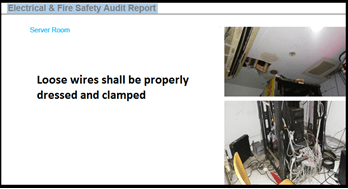
Electrical Safety Audit image showing loose wires in a server room, highlighting the need for proper wire dressing and clamping to prevent electrical hazards.
Loose wires identified during the Electrical Safety Audit to be properly dressed and clamped for safe and organized electrical installation
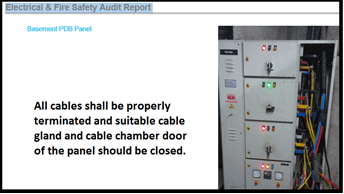
Electrical Safety Audit image showing a basement PDB panel with exposed cables, emphasizing the importance of proper cable termination and closed chamber doors for safe operation
Audit observation: All cables must be properly terminated, and cable chamber doors securely closed to ensure safety and reliability
0
A DECADE OF SAFETY, AN Ai POWERED FUTURE

Recognized for excellence.

0

PROJECTS DELIVERED ACROSS THE GLOBE

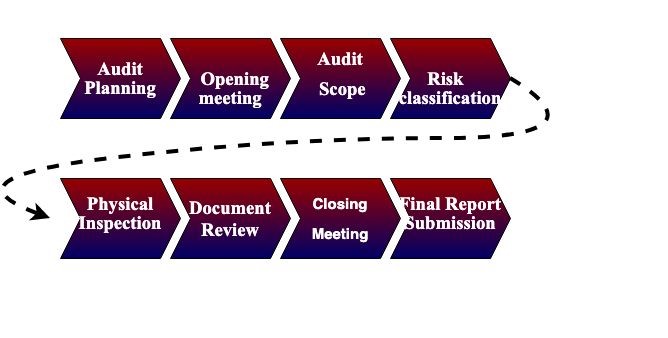
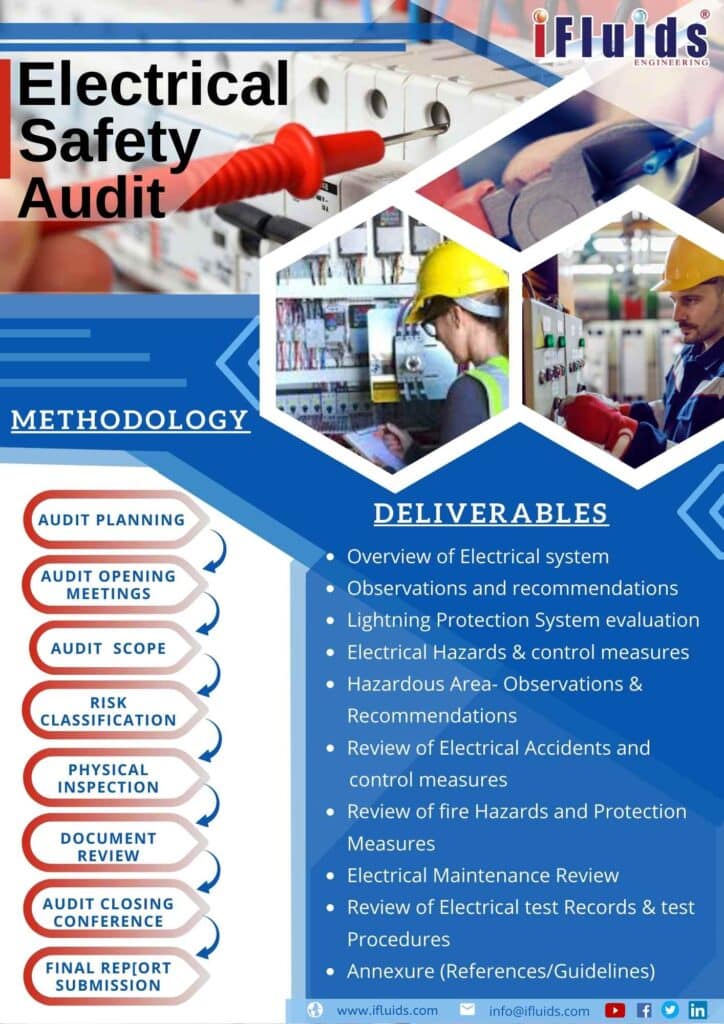
Audit Methodology

We follow a structured, step-by-step methodology to ensure accuracy, transparency, and compliance.

  1. Audit Planning – Define onsite activities, scope, and audit procedures.
  2. Opening Meeting – Discussion with facility management to verify existing system information.
  3. Defining Scope – Customized as per client requirements and facility type.
  4. Risk Classification – Each observation is categorized based on its risk severity.
  5. Physical Inspection – Comprehensive inspection of electrical panels, cabling, and protective devices.
  6. Document Review – Evaluation of drawings, maintenance logs, policies, and test reports.
  7. Closing Conference – Presentation of audit findings and recommendations to site representatives.
  8. Final Report Submission – Detailed report with observations, analysis, and actionable solutions.

Deliverables

The final Electrical Safety Audit report by iFluids Engineering includes:

  • Overview of the facility’s electrical system
  • Observations, risk ratings, and improvement recommendations
  • Lightning protection system evaluation
  • Fire and electrical hazard assessment
  • Review of electrical accidents and preventive measures
  • Maintenance and testing record evaluation
  • Annexures and reference standards

Standards and Guidelines Followed

Our audits comply with all relevant national and international standards, including:

  • IS 14489 – Code of Practice for Occupational Health & Safety Audits
  • CEA (Safety and Electric Supply) Regulations, 2010
  • National Building Code (NBC), 2015
  • NFPA Codes for Fire and Electrical Safety
  • BIS Standards (IS Codes) for electrical systems
  • Industry Good Engineering Practices (GEP)

How Often is an Electrical Safety Audit Required?

OISD-STD-244 requires facilities handling and storing petroleum products to conduct a complete electrical safety audit once every three years. Earth resistance values need an additional annual check between full audit cycles.

This three-year cycle applies on top of routine preventive maintenance schedules, not instead of them. A facility due for its OISD-STD-244 audit should also confirm alignment with CEA (Safety and Electric Supply) Regulations, 2010 and any state-level electrical inspectorate timelines, since inspection intervals can vary by installation type and license category.

iFluids Engineering tracks your facility’s audit due dates and schedules the next OISD-STD-244 cycle before it lapses, so compliance gaps never become a licensing risk.

Why Choose iFluids Engineering?

  • Expertise in industrial, commercial, and institutional electrical safety audits
  • Certified professionals experienced with CEA and BIS regulations
  • Use of advanced thermography and diagnostic tools
  • Detailed and actionable audit reports
  • Proven track record with leading Indian clients

Ensure Electrical Safety, Reliability, and Compliance

Prevent costly electrical hazards and ensure uninterrupted operations with iFluids Engineering’s Electrical Safety Audit Services. Our team ensures your systems meet safety standards while enhancing performance and reliability.

Contact us to schedule an Electrical Safety Audit for your facility in India and worldwide.

Frequently Asked Questions

OISD-STD-244 requires a complete electrical safety audit once every three years for petroleum storage and handling facilities. Earth resistance values should be checked annually between full audit cycles to catch degradation early and keep the facility compliant year-round.

Yes. CEA (Safety and Electric Supply) Regulations, 2010 make periodic electrical audits mandatory for industrial and commercial facilities, and OISD-STD-244 sets the three-year cycle for petroleum depots and terminals. Non-compliance can affect licensing and insurance standing.

Routine maintenance keeps equipment running day to day. An electrical safety audit is a periodic, standards-based review that evaluates compliance, hazard exposure, and system integrity as a whole, then produces a formal report with risk-rated findings and corrective actions.

A full audit examines shock, arc flash, and fire hazards, earthing and grounding systems, lightning protection, load distribution, cable termination, and maintenance and test records. iFluids Engineering benchmarks each finding against CEA, BIS, NFPA, and OISD-STD-244 requirements.

The audit should be carried out by a competent, qualified electrical safety auditor or agency independent of day-to-day facility operations. iFluids Engineering’s team includes certified professionals experienced with CEA, BIS, and OISD compliance across industrial and petroleum facilities.

A lapsed audit cycle can expose a facility to undetected hazards, statutory non-compliance, and licensing risk under CEA and OISD-STD-244. iFluids Engineering tracks audit due dates for clients and schedules the next cycle before it lapses.

Related Case Studies

Our latest highlights
View All Case Studies